
Respiratory therapy students at Thompson Rivers University are getting hands-on experience with hospital-style equipment and patient simulations at a new training centre in Sahali Centre Mall.
The new training centre soft-launched in January, with equipment and resources being relocated at the time. However, budget considerations and moving logistics delayed completion of the facility’s setup, and the intent became to have it operational by the winter semester. The summer allowed completion of the remaining setup and renovations, as regular labs were not running, leaving the facility fully established and ready for regular use in the fall.
B.C.’s only respiratory therapy program previously operated out of a much smaller space on TRU campus. While the old facility was equipped with stretchers, some training mannequins and two small simulation rooms, it lacked a realistic hospital environment.
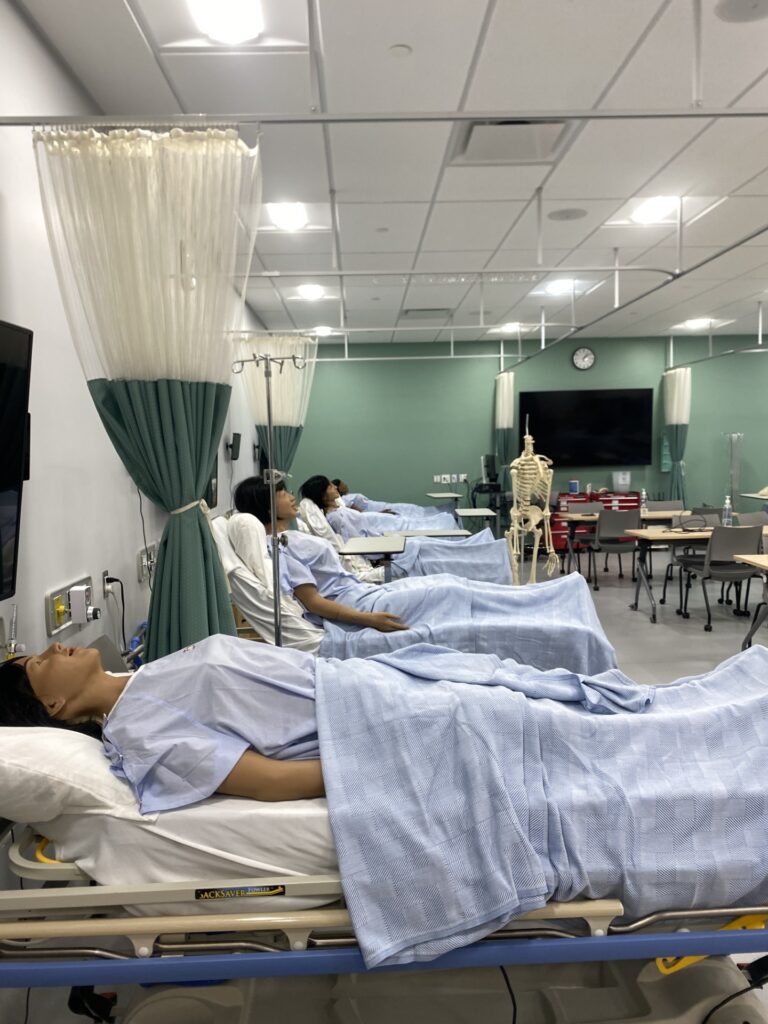
The new annex design puts greater emphasis on replicating a hospital. Its clean interior features a lobby, white walls with blue accents and a layout resembling that of a clinical ward.
“We don’t want to send our students off into clinical practice without really giving them a good idea of what to expect. So, we’re really trying to emphasize realism,” said Vicky Parhar, an instructor in TRU’s respiratory therapy program. “We’re allowing these students to learn in a safe environment where they can practise everything that they’ve learned in class right away, hands-on.”
Parhar has been a respiratory therapist for nearly seven years and an instructor in TRU’s respiratory therapy program for three years. He also emphasizes the value of giving students a safe space to make mistakes and build confidence.
“And that really instills a little bit more confidence in them and gives them a little bit more assurance that, hey, I can do this,” he said.
The training centre features three larger labs, two debrief spaces and two simulation rooms with dedicated control rooms.
As part of the expansion, the centre also received upgraded equipment. Among the additions, Parhar highlighted the new ventilators and high-fidelity mannequins. The ventilators are similar to those found in many B.C. hospitals, helping students become familiar with the equipment before clinical placements. Unlike the previous mannequins, the new ones can have their heart rate and breaths adjusted to simulate different patient conditions. Students are now able to practise more complete head-to-toe assessments than the old mannequins allowed.
This year, the program has also started bringing in actors to play the role of the patient, further bridging the gap between classroom learning and clinical practice.
“We’re really trying to expose them to clinical situations that you’d commonly see so that they’re prepared to deal with it with a real person,” Parhar said.
For students, many of the improvements outlined by Parhar are reflected in their experiences at the new annex. Both returning students and those beginning in-person training have spoken positively about the expanded facility.
Ibrahim Ismail and Andrea Richter, both second-year pre-clinical respiratory therapy students, pointed to the new space as an improvement over the previous facility.
“There’s just way more [space]. When we were in the old lab, it was just basically two small classrooms that you just go between, and it just felt a little bit more claustrophobic,” Ismail said.
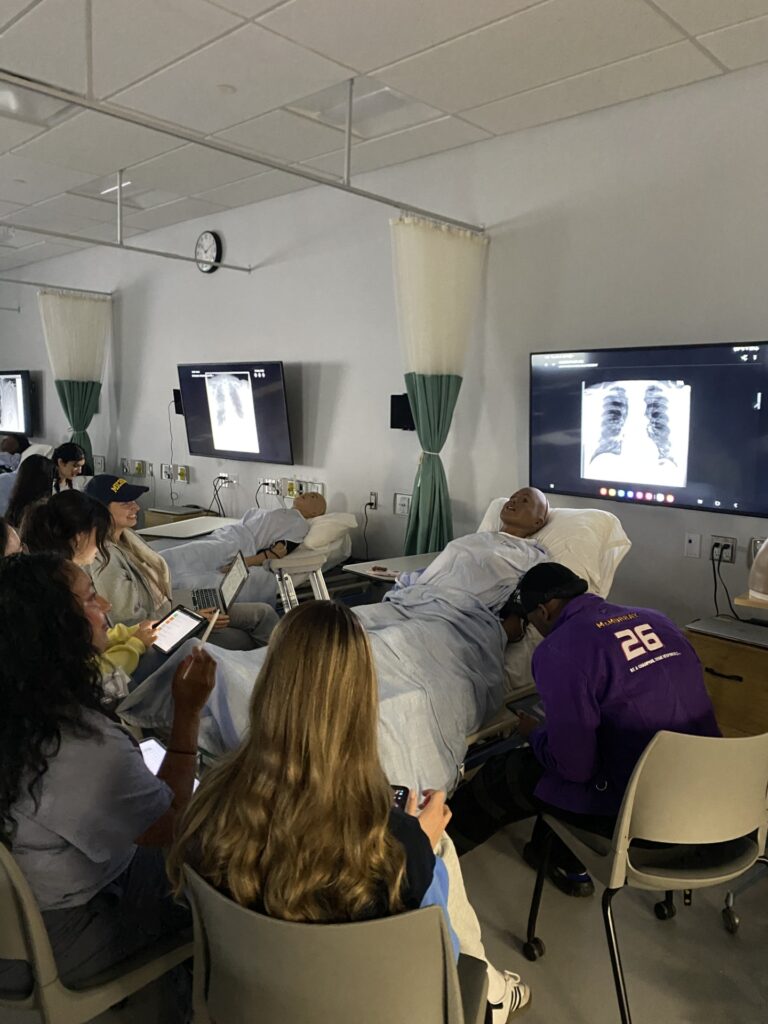
Ismail also explained how the additional lab space has allowed for smaller lab groups and greater access to instructors.
“It’s just more focused, more specialized, so you get a lot more out of it because you can talk to the prof one-on-one because there are less people in the class,” he said.
Richter agreed with Ismail about the benefits of the additional space and pointed to the upgraded equipment as another significant improvement over the previous facility.
“We have a lot more equipment with the new space; we have simulator mannequins which talk and we can listen to their breath sounds and there’s a bunch of different settings you can change,” Richter said. “So that has been really helpful, especially for, like, specific labs that we have patient assessment, where if you just have a normal mannequin, you can’t really do much with it.”
Richter also noted the greater sense of community between students and instructors that the new annex has brought with it.
“There’s more of a sense of community with the other students because we all just come here and hang out,” she said. “There’s also more opportunity for open dialogue with [instructors]. Sometimes they just like to sit on the couch and talk to us.”
The two students agreed that the training centre’s atmosphere feels more like a workplace than a traditional classroom.
While Ismail and Richter experienced both the old and new training spaces, fast-track respiratory therapy students Angelli Asturias and Marcus Hui began their in-person training at the new annex.
Asturias explained how the patient simulations and mannequins have helped her develop the practical skills needed for a career in respiratory therapy. “We get to learn a lot about different patients, different patient populations, and we can apply those hands-on skills that we learn to the mannequins,” she said.
For Hui, the opportunity to practise repeatedly with hospital-style equipment has made the transition to in-person training less intimidating.
“Having all the equipment here and really getting a chance to get repetitions in really helped with my confidence. So, I feel as though I’m getting better at it and still learning,” he said.
Ultimately, the new training centre seems to have made all the difference for TRU’s respiratory therapy program. The expanded space, new equipment and greater hands-on opportunities offer students an environment where they can gain practical experience, build confidence and develop stronger connections within the program.