
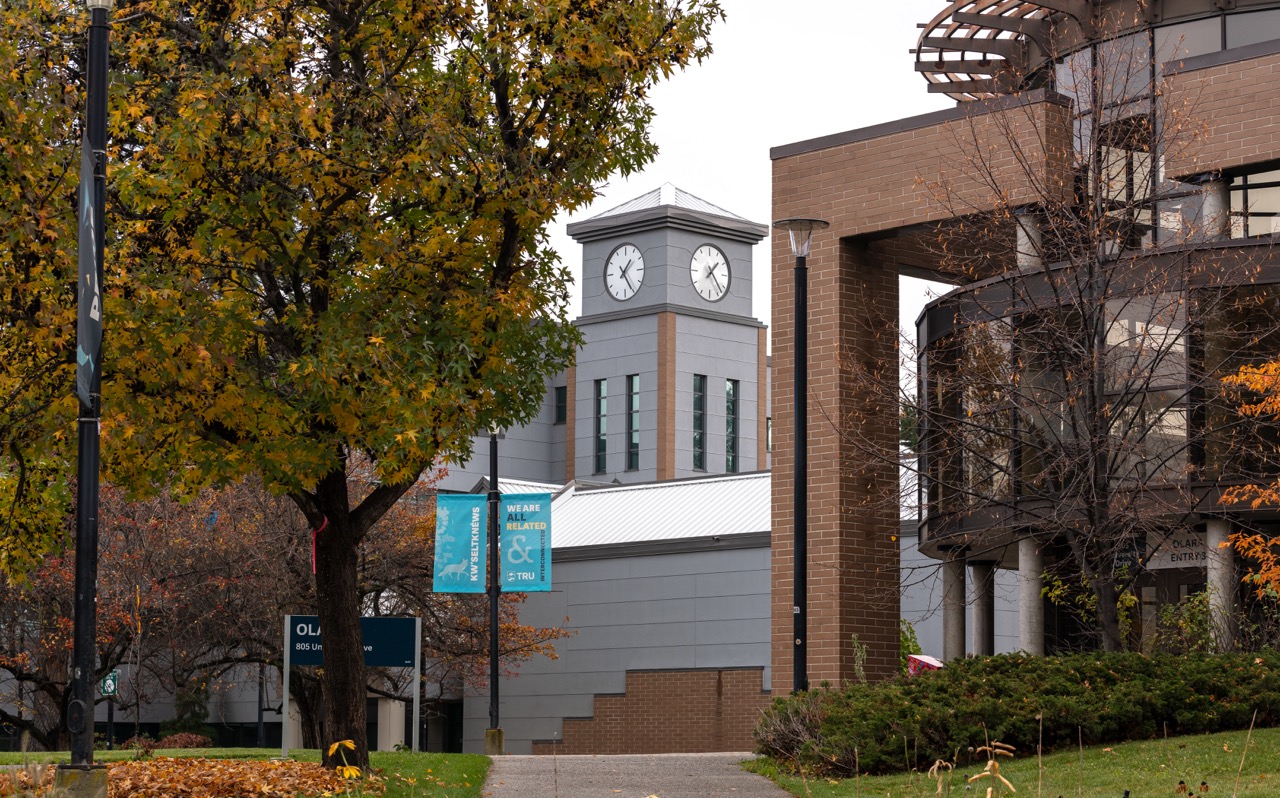
TRU placed 17th out of 19 universities in Maclean’s mid-sized university category, prompting questions about the institution’s academic reputation, student experience and long-term priorities.
For some students, the ranking does not fully reflect what the university has to offer.
Joaquin Amanse, a Bachelor of Communications and Digital Journalism student, who is also minoring in marketing, said they believe TRU deserves a higher position.
“I feel like TRU should be a little bit higher, to be honest,” the student said. “I heard before that we’re one of the top research-led universities in Canada.”
Amanse suggested a position closer to 13th or 14th would better reflect the university’s strengths. They pointed to TRU’s campus, professors, course offerings and athletics as reasons they believe the university provides a positive educational experience.
“I love what TRU has to offer. It has a beautiful campus. Everybody here is pretty nice. The professors are pretty good,” he said.
However, the student also acknowledged areas where TRU could improve, particularly in accessibility and recreation.
Transportation and accessibility concerns
Amanse’s biggest concern was transportation to and from campus.
The third-year student believed Kamloops’ public transit system can make commuting difficult, particularly during peak hours when students are travelling to and from school.
“I feel like the bus doesn’t come as often as it should,” they said, adding that some of the bus routes could also be improved.
Amanse described difficulties catching buses during the morning and afternoon rush, when high school and university students often compete for limited space. They suggested that having more dedicated transportation options for different schools could help alleviate overcrowding.
Parking was another concern, with the student saying additional parking spaces would make accessing campus easier. While acknowledging that transportation is also a broader Kamloops issue, they believe improving accessibility around the university should be a priority.
Amanse also suggested expanding recreational facilities on campus. Although TRU offers intramural sports such as soccer and basketball, they said scheduled activities do not necessarily accommodate students with busy academic schedules. They suggested additional outdoor facilities, including pickleball courts and other recreational spaces, that students could access more freely.
“I feel like more recreational facilities would be nice to actually use on campus whenever we want,” they said, adding that more opportunities for physical activity could support student wellness.
Recruitment and student services remain concerns
While some students believe TRU offers a positive academic environment, local political organizer and TRUSU student affairs executive Levi Escobar questioned whether the university has done enough to attract domestic students.
Escobar, who is helping facilitate a transition within the local Young NDP club, said federal restrictions on international student permits have created challenges for TRU’s development. However, he argued that the university’s reliance on international enrolment has exposed weaknesses in its domestic recruitment strategy.
“We were not really going out and appealing to domestic students,” Escobar said.
Growing up in the region, Escobar recalled seeing other post-secondary institutions visit local high schools to introduce students to their programs.He mentioned institutions such as UBC Okanagan, Okanagan College and colleges in the Kootenays as examples of schools that made an effort to connect with prospective students.
He said he did not experience similar outreach from TRU.
“I didn’t know TRU existed until, like, second-year college, to be honest,” he said.
Escobar also believes TRU should prioritize improving the quality of its student services. One concern he raised was the university’s reported plans to implement autonomous artificial intelligence agents within student services. Despite the university’s repeated denial of these plans, many in the community consider it a worrying possibility.
The TRUSU executive, on his part, feels that generative AI tools can produce inaccurate information and misunderstand questions, potentially creating difficulties for students seeking assistance.
“These things have mixed results when it comes to question comprehension and accuracy of output,” Escobar said.
He argued that universities should prioritize reliable student support rather than relying on technology that may require continuous human oversight and correction.
Looking ahead
Despite their differing perspectives on the university’s ranking, both students identified several opportunities for TRU to improve the overall student experience, from recruitment and student services to transportation and parking.
Amanse maintained that TRU provided opportunities for students to develop foundational career skills and, ultimately, they believed the university’s ranking should not overshadow the positive aspects of the campus community.
As TRU continues to navigate changes in international enrolment and its broader institutional priorities, questions remain about how the university can strengthen its reputation while addressing the needs of its current students.