
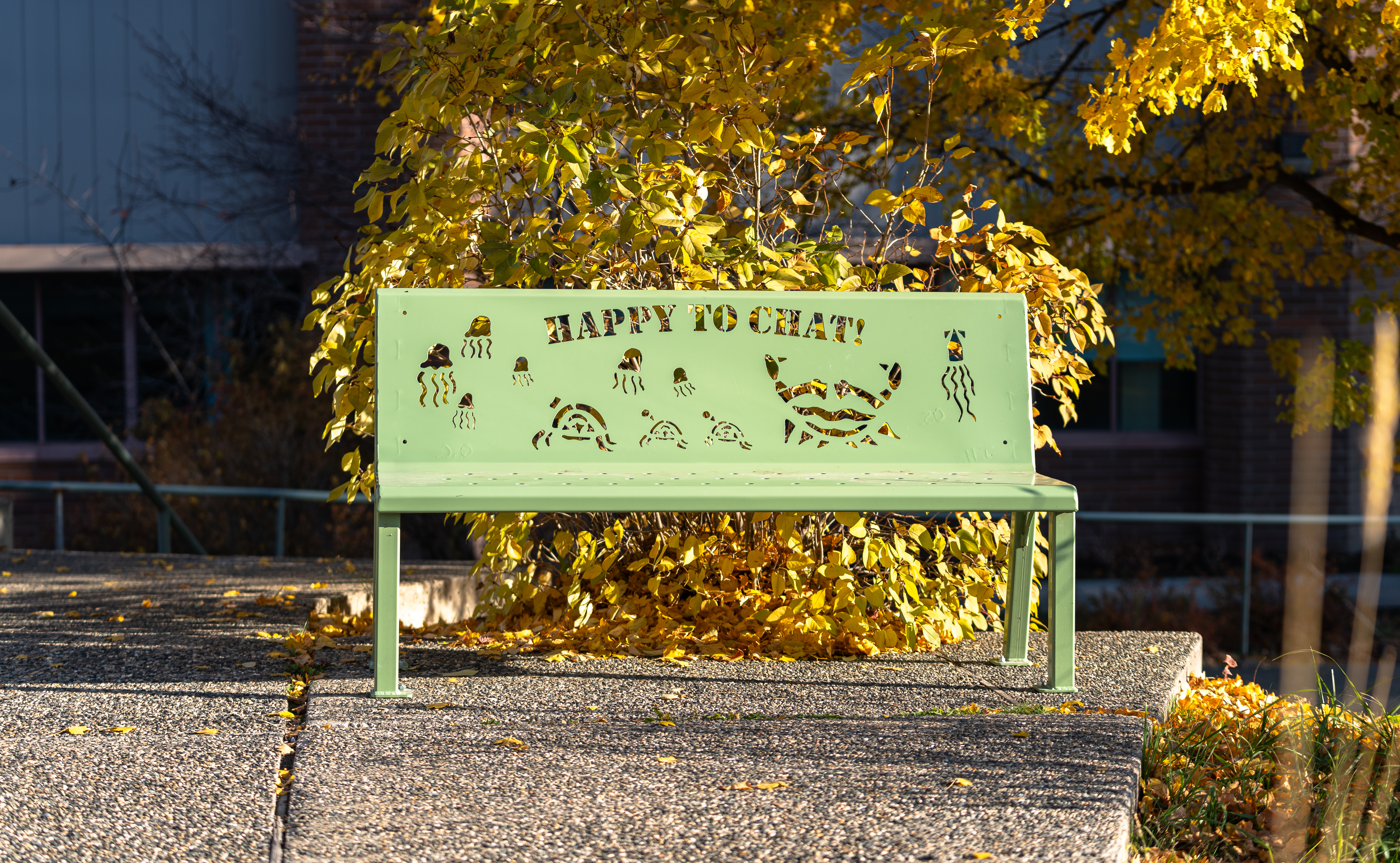
Intended to reduce loneliness on campus, the Happy to Chat benches have been established at TRU since this Summer, and The Omega has travelled across campus to figure out what students think about the initiative.
The TRU community has Professor Jessica Chardon, of the nursing faculty, to thank for pitching the idea to Student Services. She shared how the team thought building the benches in-house would be an opportunity for welding and visual art students to leave their mark on campus.
And so, they did. 19 welders built six benches, each assigned to TRU artists who designed a unique theme.
Though students had a general idea of what the benches were for, the benefits behind the proposal were perhaps less generally understood.
Sitting a few meters from the bench at Old Main’s main entrance, psychology student Natali Wiseka acknowledged that it is a “cool concept.”
“Just being able to get to know somebody new would be kind of cool,” she added. “It may not go anywhere, but there’s also the potential of a friendship.”
Wiseka isn’t the only one who feels that way.
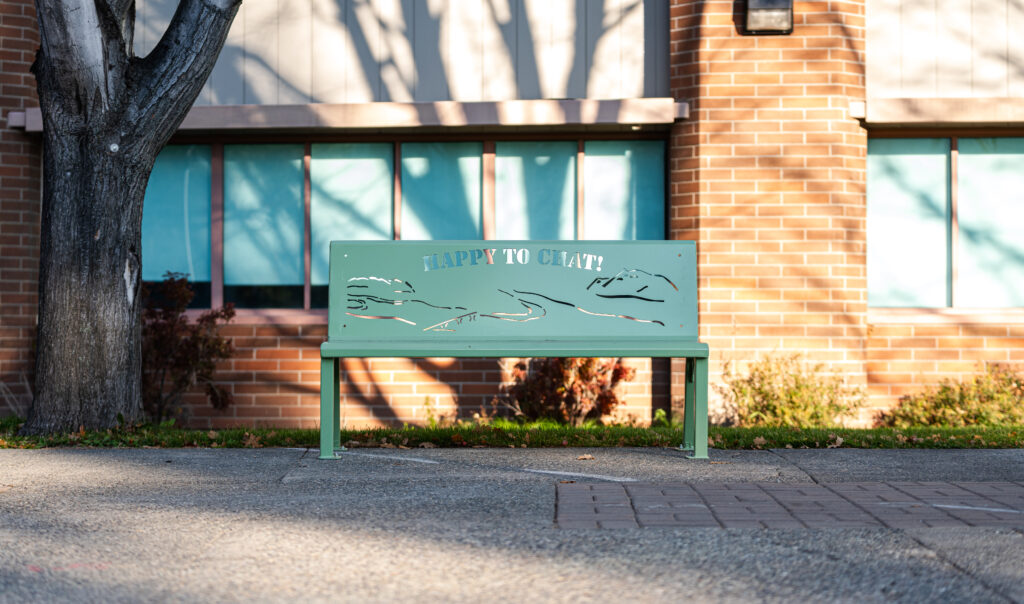
In conversation with The Omega, Chardon mentioned she hopes people also use it to connect briefly and put their phones down for a couple of minutes.
Recently transferred from McGill University, student Dhruv Patel, hoped to find the same as well.
The first-year student shared that he is interested in having a casual chat with someone else in between classes. “You don’t have to tell me your history or have a deep chat or [want to] be friends, but like, ‘hey, what’s up? How is your day going?’”
It seems that TRU students are giving these benches a new meaning.
The movement began in 2019, spearheaded by Allison Owen-Jones from Cardiff, U.K., after she noticed an elderly man sitting alone at a bench for 40 minutes. She then thought things might be different if there was something that would indicate openness to conversation.
For his part, Patel recalled sitting on a Happy to Chat bench at the start of the semester, but was unsuccessful in finding conversation with a fellow student.
Students broadly had mixed responses on the goal of the friendship benches to reduce loneliness on campus.
“I haven’t seen many people use it,” Anaiah Azcueta, who has been living in Canada since 2022, said, “but if they would, it would be a great tool to help people gain more friends in university, find their circle of friends and reduce loneliness.”
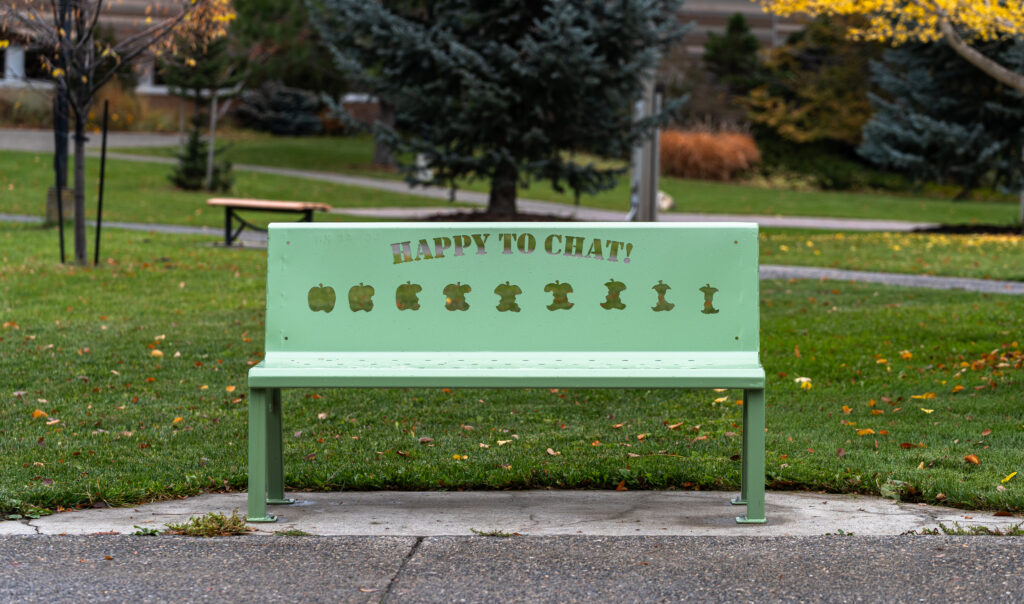
On that same note, Wiseka said that there must be more widespread awareness of the initiative for students to approach each other.
“Maybe it needs to be better advertised,” the first year student said, later adding that re-painting it to a more vibrant colour or adding a sign besides it might welcome people more.
Azcueta agreed, sharing how posters might inform other students of the real reason behind the movement.
The benches have been advertised on the university’s social media already, and is getting more coverage on the Wellness Centre’s Instagram page as well. Despite these efforts, many students seem fairly aware of the campaign.
Patel, on the other hand, thought something different might be more helpful for students looking to overcome loneliness.
“Imagine if, in Old Main’s Student Street, we had a table with a thousand-piece puzzle. People would walk in and try to figure something out—see where the pieces go, [and] have conversations.”
This idea comes from a shared puzzle table Patel remembers in McGill’s library, but TRU already has a similar space, the Cozy Connection Corner, put together last semester by the Wellness Centre, and in the exact location Patel envisioned. There, faculty and students can find puzzles, board games and other items placed in different shelving units that might bring the community together.
It seems like, though the university is ostensibly on the same page as students in many respects, there is still a disconnect on how to make these projects reach as many people as possible.