
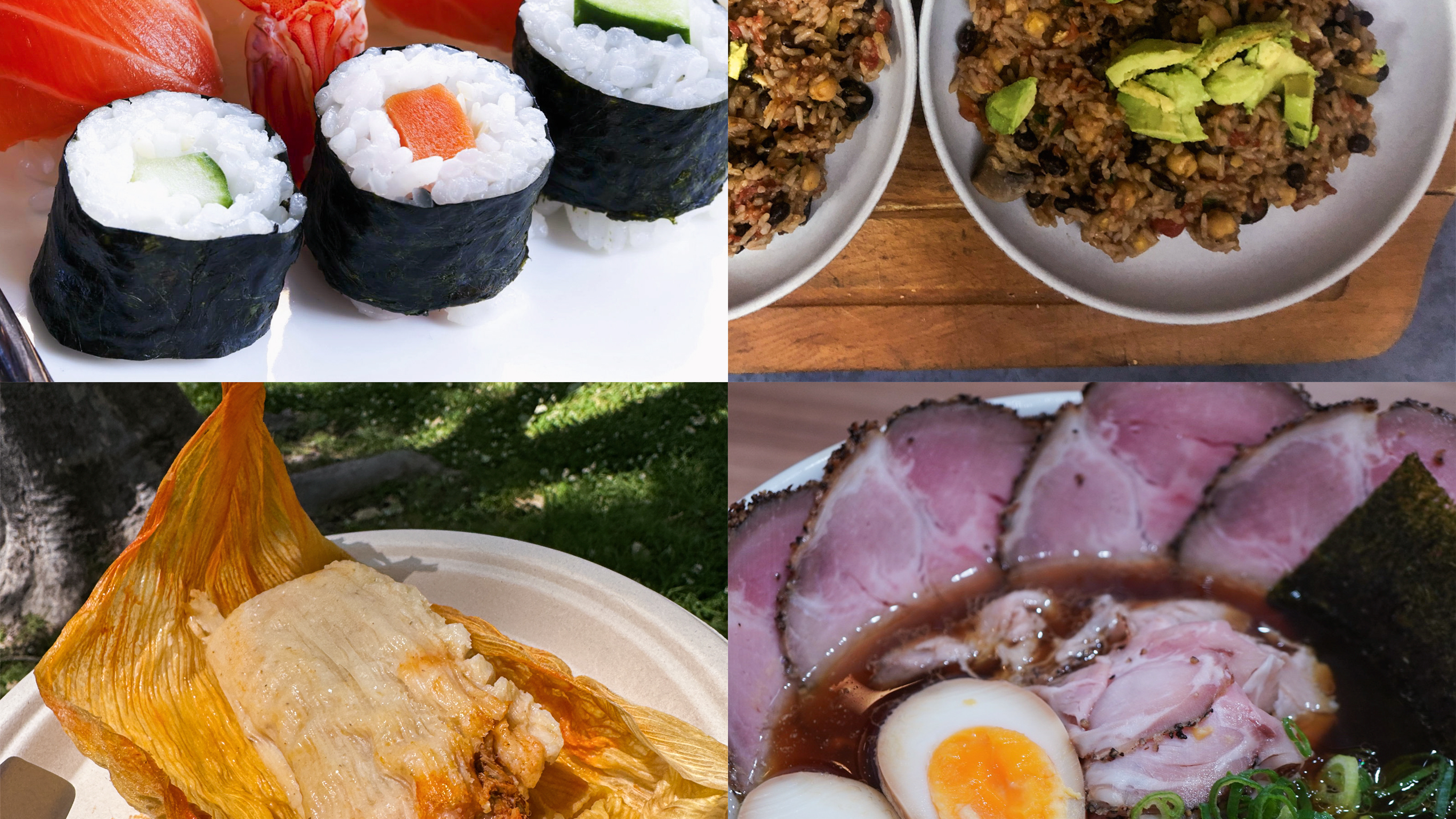
When classes pile up and homesickness hits, comfort food becomes more than meager nourishment. For many TRU students, it’s a way to feel close to home even while living far from it.
“My comfort food is sushi, but I also like ramen — honestly, just Japanese food in general,” said Marvelous Fasan, an international student from Japan. “It reminds me of home. There’s just something about the simpleness of Japanese food that really gets me warm.”
Fasan said what she appreciates most is how uncomplicated it is. “There’s no overly added sugar or spices. It’s just simple ingredients of the food coming together to make a really delicious flavour.”
Another student, Marvellous Ifezue, said his comfort food in Kamloops is less about tradition and more about what feels accessible. “Hatsuki Sushi,” he said. “It’s like lots of sushi, buffet-style and it is pretty cheap and really tasty.”
Ifezue added that he also turns to Costco hot dogs when he wants something familiar, tasty and affordable.
For Edilson Chi, comfort food is deeply tied to culture, flavour reminiscent of tradition and security.
“My favourite would be rice and beans,” Chi said. “It’s a traditional food. I’m not sure if it’s tradition exactly, but it’s a food that comes from Belize, so that’s one of my favourite foods.”
He said he also loves tamales, which he connects to his Hispanic heritage.
“I love a mixture of Belizean and Mexican foods. That’s what just takes my heart,” Chi said.
“Anything that’s very tasteful — anything that has a good mixture of flavours, that’s what I love,” he said. “Even Indian foods — everything is really amazing,” he told The Omega.
Arsal Sheikh, who is from Pakistan, said comfort food is inseparable from home.
“My favourite food is nihari from Pakistan,” Sheikh said. “It’s my home country, so of course it has to be one of my favourite foods. It’s amazing. It’s like a stew.”
Stefan (Dohu) Chuong said his comfort food is tied to how he grew up eating.
“My favourite dish is a Vietnamese dish called com tam,” he said. “The English translation is broken rice.”
Chuong said what makes the dish special is its balance.
“I grew up eating it, and it’s very balanced,” he said. “You have a good portion of protein, good carbs and vegetables for fibre and vitamins.”
Across cultures and cuisines, students described comfort food as more than taste; it was memory, routine and belonging. Whether it was “simple ingredients” that “come together to make a really delicious flavour,” a stew from home, or something “really tasty and really cheap,” each dish carried a sense of grounding. For students navigating a new country, busy schedules and the weight of being far from home, these meals offer something small but powerful: a familiar feeling in unfamiliar places.