
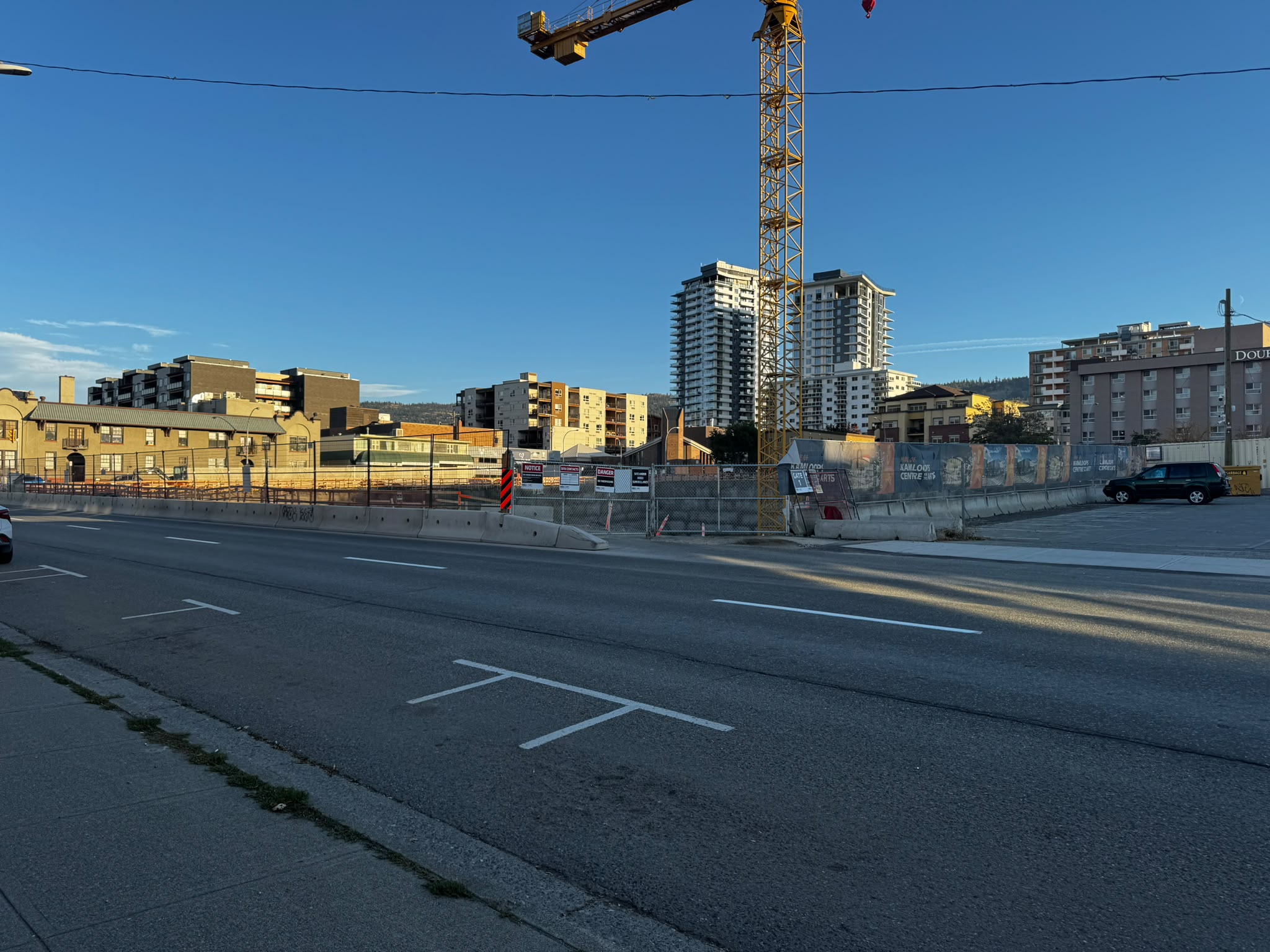
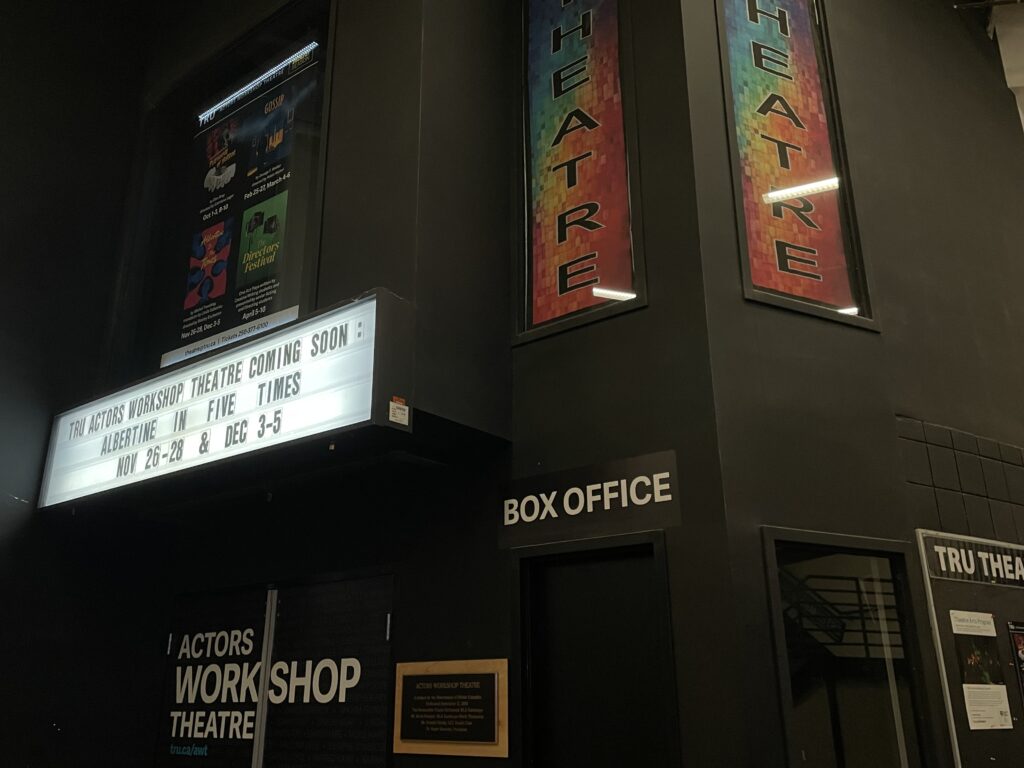
Current members of the Actors Workshop Theatre (AWT) share their thoughts about the emerging Centre for the Arts, currently under construction at 393 Seymour Street. The new space may pave the way for a flourishing performing arts community, in addition to providing TRU alumni a step further into their careers on the local stage.
The Centre for the Arts Society report showed that the facility will offer 31 full-time jobs, 90 per cent of which would be occupied by B.C. residents and dominantly by Kamloopsians.
“We have a wonderful season at the AWT,” said theatre professional and TRU professor Catriona Leger, “but within Kamloops, there have been limited avenues for students and graduates to step into self-producing.”
Having seen the engagement the Great Canadian Theatre Company brought to Ottawa when they got a new building, Leger, with over 30 years of experience in the field, said she sees a great amount of potential and opportunity in Kamloops.
“I’ve seen students who have graduated from here and moved to Vancouver and come back,” Leger continued. “They are staying in town because there is a viable place for them to make art, produce, get hired [and] have a living in the arts.”
The strong demand for arts and culture has driven the local city council to accept the proposal of building a Centre for the Arts right in the heart of the city.
This facility was first proposed in 2015, with a request to borrow $90 million from the City of Kamloops. After the borrowing approval was defeated at referendum, the official groundbreaking for the Kamloops Centre for the Arts took place a decade later on Nov. 26.
“This performing space [will probably] increase the appreciation of the arts culture in Kamloops,” said Georgia Morris, a Kamloopsian, TRU student and performer. “It will make it feel more grounded and more central to our community.”
Having experienced the main stage of many venues, Morris hopes that the Centre for the Arts addresses gaps fellow artists have noticed in other venues.
“We often have to use a great amount of microphone technology to increase the [sound] for the audience and the performers so they can hear themselves,” Morris said, hoping the facility is built taking acoustic construction in consideration.
Though in the business case, the Society mentioned acoustics when describing the conditions and availability of existing facilities, it was not explicitly mentioned again in the report.
TRU student and AWT member Lukas Wood also shared that he hopes that the stages in the Centre for the Arts are fit to accommodate groups and productions of different scales.
The society reported there will be a main stage theatre with 1,200 seats, a studio theatre with 450 seats, and a black box theatre with “flexible space.”
The last of these three typically refers to a square or rectangle room with back walls and flat floor, which allows for flexibility in how the stage or the seat is arranged.
Despite the needs Morris and Wood expressed, they both mentioned the importance of future students using the black box theatre within TRU.
Learning first-hand the different components and aspects of a play, said Morris, can prepare the performer and the technical team to efficiently work in other types of venues.
Leger added that TRU’s theatre introduces and familiarizes students on how to work in the arts and culture industry before continuing their careers.