
Disclaimer: This article broadly discusses the kidnapping and murder of Indigenous women and girls along the infamous Highway 16 in Northern British Columbia. Reader discretion is advised.
For over nearly six decades, Indigenous women and girls have been the targets of an ongoing femicide across the country. From April 7 to 10, the Carrier Sekani Family Services hosted community members, advocates, elders and government officials for the 20th symposium of the Missing and Murdered Indigenous Women and Girls: Highway of Tears.
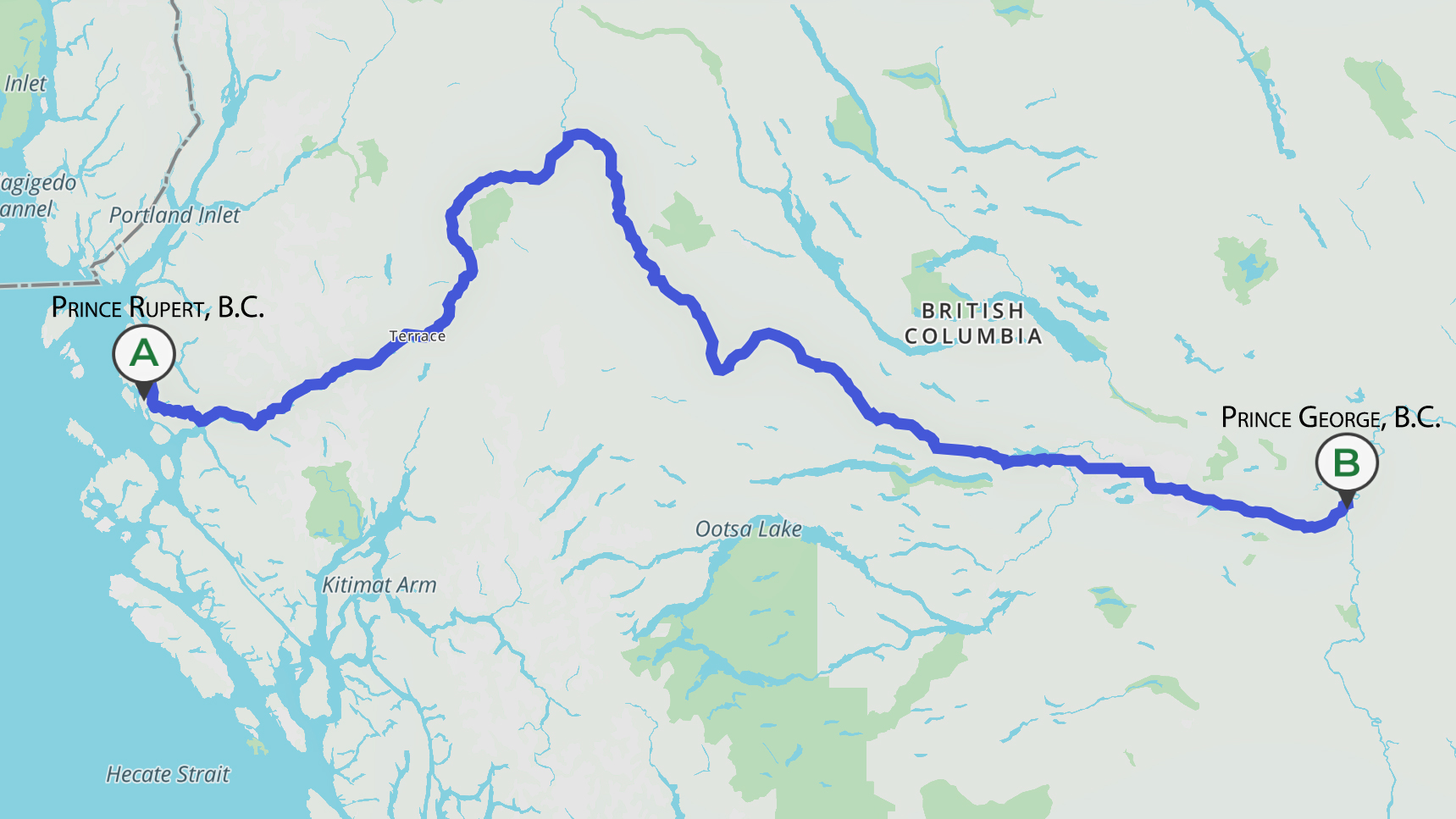
This year marks two decades since the 2006 Highway of Tears Symposium began, when families, community leaders and advocates came together to raise national awareness and call for action in response to the femicide. Across Canada, Highway 16 is recognized as the “Highway of Tears,” a 724km stretch between Prince Rupert and Prince George, where Indigenous women and girls have gone missing or been found murdered for decades. The initial gathering in 2006 produced a report containing 33 recommendations, aimed at improving safety and accountability, many of which, attendees noted, remain unfulfilled. Despite being an event for 20 years, this particular symposium was the first in which government members attended and participated.
This year, the symposium offered an opportunity to rejoin in honouring the lives lost, to uplift the voices of families and survivors and to engineer a path forward rooted in justice, healing and safety for Indigenous women in Canada.
The symposium opened with a traditional land acknowledgement from elder, Loretta John and was followed by CSFS member, Mary Teegee-Gray. Teegee-Gray commenced the opening with the story of Aielah Saric-Auger, a 14-year-old girl living in Prince George who was last seen walking along Highway 16 on Feb. 2, 2006 and was later found murdered along the highway on Feb. 10 that same year. “Enough is enough; our sisters, daughters, cousins … they are going missing and nothing is being done about it,” Teegee-Gray said.
The case of Saric-Auger catalyzed The Commemoration Fund, announced in 2019 by the Government of Canada, which promised to honour the victims and their families. Though the fund was brought forth in 2019, many communities are still awaiting solace and reparations. This, however, is not an isolated incident.
Investigations into MMIWG commenced in 2003 when the federal government began uncovering the realities of the femicide. Along Highway 16, industrial camps, known as “man camps,” have been identified as sites of increased physical, environmental and sociocultural risks to the local Indigenous communities that surround them.
“Men at these [camps] are preying on the young girls in our communities,” Teegee-Gray said.
For many Canadians, trust is placed in institutions such as the RCMP, which are tasked with protecting communities. However, speakers at the symposium described a long history of strained relationships between law enforcement and Indigenous families, citing repeated instances where cases were dismissed or not treated with urgency. Families recalled being told their loved ones were “just runaways,” a police response that has contributed to decades of mistrust.
Barriers to safe transportation were also identified as a key factor contributing to vulnerability along Highway 16. With limited and unaffordable transit options in the northern parts of B.C., many women have been left with little choice but to hitchhike between communities, increasing their risk of harm.
Panellists from organizations and academic institutions across B.C. explored the broader conditions that make Indigenous women disproportionately vulnerable. They emphasized that while gender-based violence is a global issue, its impacts in Canada are intensified by the ongoing effects of colonialism, systemic inequality and social marginalization.
Personal accounts shared during the symposium underscored the severity of systemic failures and made clear that it is not only the RCMP who dismiss the gravity of the situation. One story described an Indigenous woman in Vancouver’s Downtown Eastside who was mistakenly declared deceased and transported to a hospital morgue, only to later regain consciousness without receiving adequate support or care. Speakers used this example to highlight gaps in advocacy and the urgent need for accountability across institutions, such as in the medical field, rather than placing blame solely on RCMP agents.
Officials acknowledged the importance of rebuilding trust with Indigenous communities, emphasizing that collaboration is necessary to advance investigations, though many attendees noted that trust remains fragile.
Federal Minister of Public Safety Gary Anandasangaree addressed concerns about potential funding cuts, stating that financial support for MMIWG-related initiatives will continue despite rumours circulating online. Throughout the discussions, speakers returned to a difficult but critical conversation around accountability.
“We cannot look at missing and murdered Indigenous women without dealing with what’s happening in our community, in our families,” Teegee-Gray said. “The issue is not just from the outside.”
She emphasized that while systemic and external factors play a significant role, addressing violence within communities is also necessary.
“This is not a women’s issue,” she said. “This is a men’s issue.”
Teegee-Gray also challenged patterns of victim-blaming that continue to shape public discourse.
“The question is not why she did what she did,” she said. “The question is, why are men doing what they are doing?”
The final day of the symposium turned toward future solutions, with provincial officials such as Minister of Citizen Services Diana Gibson and Minister of Transportation and Transit Darrell Gunn, who spoke on the current status along Highway 16. In their segment, the ministers addressed infrastructure gaps along Highway 16. Discussions focused on improving cellular connectivity and assessing the reliability of service across the corridor, as well as the ongoing need for accessible and affordable transportation options.
While officials pointed to progress, many attendees emphasized that meaningful change depends on sustained action and follow-through.
Twenty years after the first Highway of Tears Symposium, the message from families, advocates and community members remains clear: awareness alone is not enough.
The lives lost along Highway 16 continue to demand justice, not only in remembrance, but in action.