
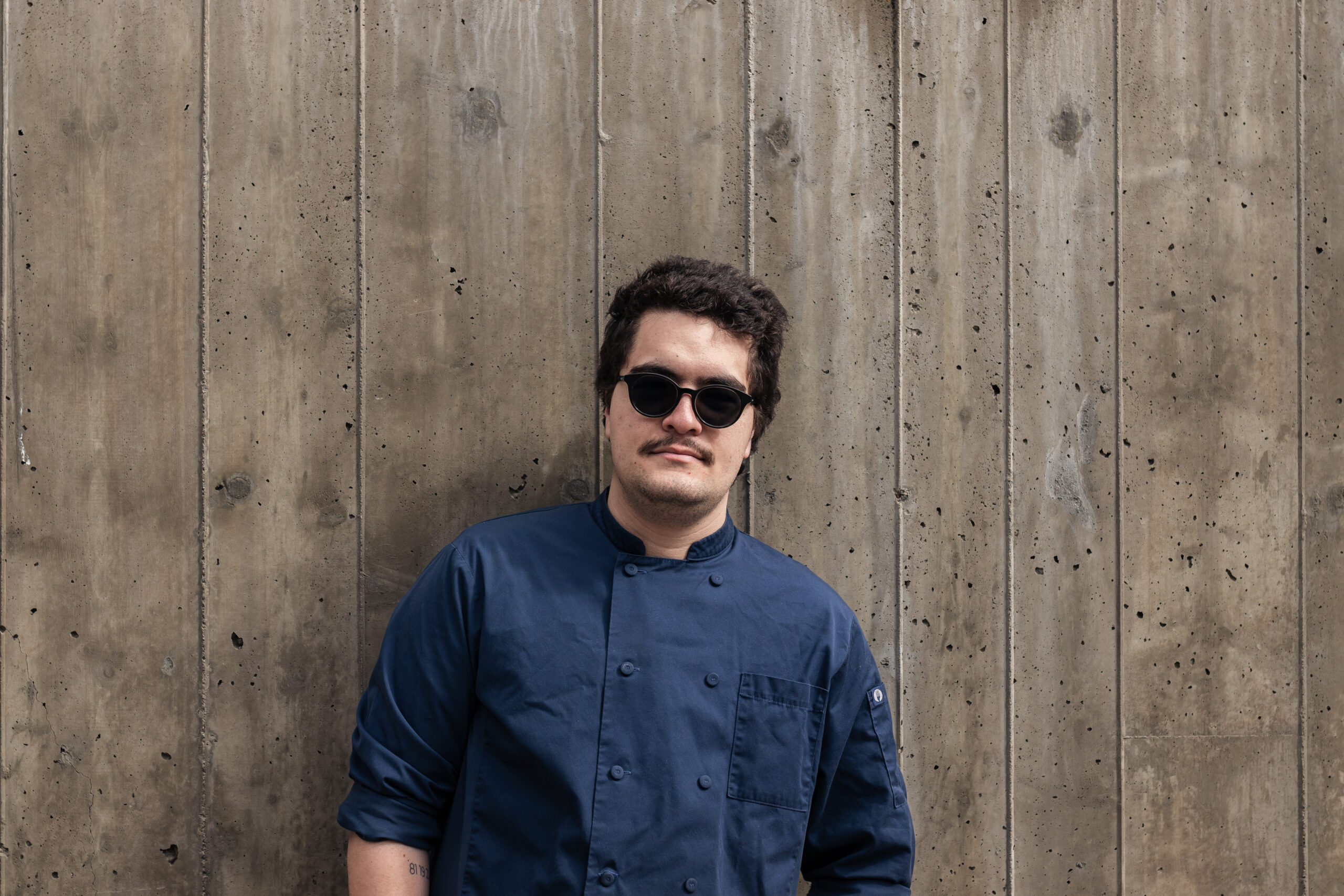
Felipe Santana Guimarães is a recent grad (class of 2025) hailing from Rio de Janeiro, Brazil. He completed his B.A. in History and Political Science at TRU and is now working as a chef at Rebo’s Argentine Cuisine. Throughout his degree, Guimarães worked numerous retail and food service jobs to cover his costs, including many overnight and early-morning shifts. Up until recently, he was working 60-hour weeks. He is passionate about teaching and hopes to build on the classroom experience he gained in Brazil. Speaking with The Omega in March, Guimarães opened up about adjusting to life in Canada and the complicated reality of working as an international student.
OSΩ: Where is home for you?
FSG: It’s always going to be Rio de Janeiro. That’s what comes to my mind. I love that city. But it’s an interesting question, because I’ve been [in Canada] for five years at this point. We have the thinking that when we’re here, everything back home is static, just waiting for us, when it’s not. People are living their lives. No matter how good friends you are, no matter what family members you are, things change. People move away. So I don’t feel like I have a home now. Because even though I love my city, I would die for it, the connections are not there anymore. My family moved away. I haven’t been home in two years, so I don’t really see my friends anymore. It’s very empty, but it’s still home.
OSΩ: What inspired you to come to Canada?
FSG: I did an exchange program for a month in Vancouver, which is the reason why I fell in love with Vancouver … It’s a little bit of the Canadian dream that’s sold to us, right? The idea that you’re going to come here, it’s a multicultural society, everyone gets accepted, everything works out fine, everyone loves each other. I came to Canada in the 2015 Trudeau-mania, like gay marriage and marijuana [legalisation]. Like ‘oh my god, this is the greatest country on Earth.’
OSΩ: Did it live up to your expectations?
FSG: That’s a tricky question, because I came here in 2021, so for my first year of university, it was online classes. I was stuck in McGill Residence. It was just so weird. That was my first year in Canada. I didn’t really know anyone, because I never got a chance to meet anyone.
The word was ‘lonely.’ It was a very lonely experience, which contrasted with my exchange, which felt so free.
[At that time], I had my first job, which also didn’t help. I used to work stock at Michael’s overnight. Shifts would start at three in the morning. I’d do 2 to 8 a.m., 4 to 9 a.m., 4 to 10 a.m. It was just a very lonely job and a lonely time in my life.
OSΩ: Do you enjoy working as a chef now?
FSG: I do and I hate it. I hate that I enjoy it.
OSΩ: What do you mean?
FSG: Being comfortable with doing something else feels like a threat. I work with a lot of people that are like, ‘I’m gonna take a gap year, take two years off to work, save some money,’ and then they’ve been cooking for 16 years. Sometimes it works as a motivation. These are some incredibly kind and good people, but I like working with them, because if I slack, if I lose sight of the objective, [I know] that’s where I’m gonna end up.
OSΩ: And what is “the objective” to you?
FSG: Teaching. I feel like it’s what I was made for. It’s what I was put in this world for. Every hour that I spend inside a classroom, I feel like ‘this is what I’m here for’ … It’s been a struggle to get there, because Canada is not really that immigrant-friendly, despite what they say. I have up to 500 hours of classroom experience, but it doesn’t count because it’s all in a different country.
OSΩ: What do you wish other people knew about your experience as an international student?
FSG: How hard it is… If it was easy, as everyone thinks it is, [everyone with the means] would do it. The amount of people that I know that just couldn’t handle it and went back home because they just can’t deal with all of it. It’s a lot of first-world problems, you know? Like, ‘Oh my God, look at me being stressed out in my degree in Canada’.
But once you go past that, you realize how hard it is when you’re working a midnight to 8 a.m. shift, and then you have class at 8:30 a.m. International students are some of the hardest-working people I’ve ever met. Some people were working more hours than they legally could, because not everyone’s in the same condition.
My second job in Canada was at Arby’s. I actually enjoyed working there, but I don’t drive, so I had to bus from the university to Valleyview every day. And that creates a limitation, because I have class until 4 p.m., and my shift starts at 5 p.m . If I had class until 4:30 p.m., I wouldn’t physically be able to make it to my shift. So you always have to think: how am I gonna go to class, and then still have enough time to go where I need to be? I was opening at eight in the morning, getting home at 11 p.m. and staying up until four in the morning doing my assignments… You have to think, ‘Do I want to pay for groceries, or get good grades?’
Recently, we’ve seen a lot of backlash from the cuts of international students because we realized how much of the Canadian economy depended on them. Who do you think is gonna work the graveyard shift at Wendy’s on minimum wage? At one point, I had three jobs on a 24-hour work restriction. And then you have people saying that, you know, we come here to get government benefits, that we come here for an easy path to immigration.
OSΩ: What would surprise people about your work experience?
FSG: Oh, the amount of [human feces] I had to clean off toilets. I’ve had to clean cocaine off toilets. It was rough. When I say the amount of human feces I’ve had to scrape out of places… because who else is going to do it? It really comes down to ‘no one else is going to do it’.
OSΩ: Are you happy with that choice you made to come here, or do you regret it?
FSG: It’s a choice. It was a choice that was made, and I’ve learned to make my peace with it… It made me who I am. It made me way more aware of things that I would never be aware of if I just stayed back home.