
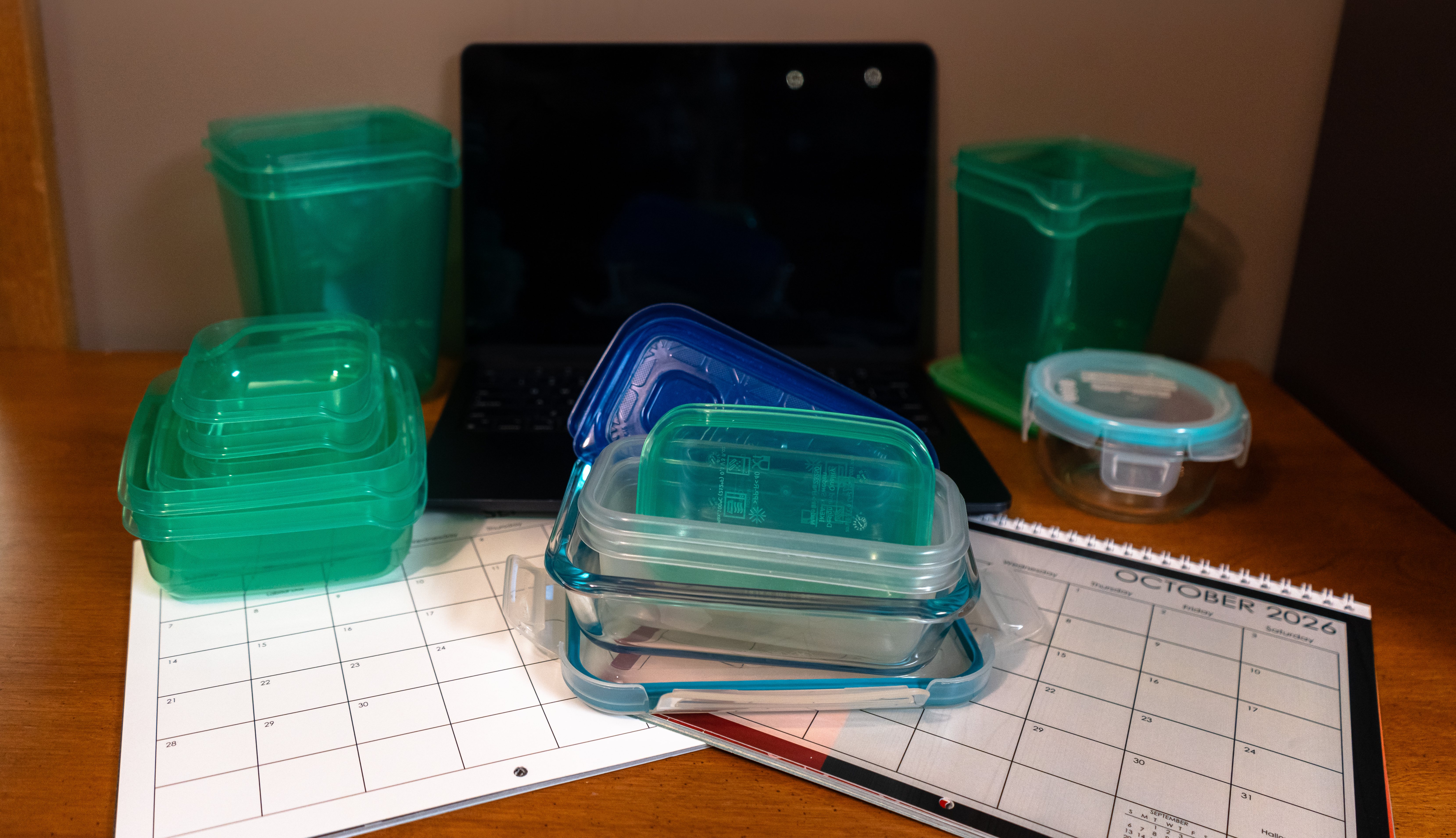
With rising costs as this semester takes off, experienced students have been reviewing their budgets and identifying what items are absolutely necessary, and what must be cut off. For freshmen, many of whom are living alone for the first time, budgeting and school shopping might seem a little daunting. The Omega has compiled some advice from soon-to-be-graduating students, in hopes that this might nudge others towards responsible spending.
Women in Business Club member, Sesathya M. Nanayakkara, recalled how easy it was to overspend on campus and groceries because she wasn’t used to cooking everyday.
“I would buy everything,” she said. “But now I have a staple list [of ingredients] that I go by and try to meal-prep like twice a week. I still have things I bought from my first year in my fridge. It’s just there; I never used it.”
Because B.C.’s grocery prices, along with Ontario’s and Alberta’s, are considered some of the highest in the country (according to loan agency Spring Financial), Nanayakkara has not only saved money by avoiding on-campus purchases, but also by meal-prepping.
The agency suggests creating meal plans as a budgeting hack. This is because having an idea of the specific ingredients needed for your meal plan can help you stick to a reasonable grocery list. Others have also added that going to the grocery store in one trip also allows car owners save money on gas.
An international student from Sri Lanka, Nanayakkara never thought that tupperware was something she needed. After doing her research, she decided to invest in reusable containers.
“I did my research… and then I bought glass and stainless steel [containters], all the good stuff. Later, I considered it an investment.”
Coming from another country, students can face challenges they never expected when starting their college journey in Canada.
Maureen Mbate shared how her education in Tanzania was less digital, and so after arriving at TRU, she felt lost for a while because of all the digital tools required of students.
“I used to be a person who had a lot of apps that I convinced myself I needed. I ended up paying like $99 without even knowing.” But after having a conversation with her mom, she reached a steady middle ground for college success: a $5 physical calendar and her laptop.
Nitheela Thiruchchelvan, who is from B.C. Lower Mainland, had a similar experience, though with a different approach. Thiruchchelvan tried the traditional way of physical calendars, notebooks and stationary; those items ended up being replaced because she found that digital worked best for her.
“I like to have everything on my Google Calendar instead of writing it down. I find that it’s [less] time-consuming to do that, so I do it all on my laptop.”
Since her bachelor degree and now through her master’s, Thiruchchelvan has trusted her laptop as well as Mbate has.
Both students emphasized how important it is to find an organizational method that works personally, while also being intentional about larger purchases.
“During my undergrad, I had the mindset of just spending and not budgeting. I actually think it’s very important for every student to be budgeting, especially if they’re living alone or paying rent,” said the master’s student.
If living on any one of the TRU residences, the cost of living for a domestic student pursuing a bachelor degree is around $15,000 for the entire school year. For an international, it climbs to approximately $32,000. This is outside of personal expenses like groceries, parking, transportation and the cost of a social life.
If a student is living off-campus, the average could either go up or down by thousands. Prices for on-campus residence go from $4,840 to $10,810 for Fall and Winter Semester, while off-campus rentals can go around from $4,800 to $12,800 depending on the housing arrangement.
The average of all rentals in Kamloops sits at around $16,792 for 8 months, based on recent reporting of average rental prices.
From meal-prepping and reusable containers to a laptop and calendar, it seems like intentional budgeting habits, many of which these students may carry into the rest of their lives, are the key to being financially responsible in college.