
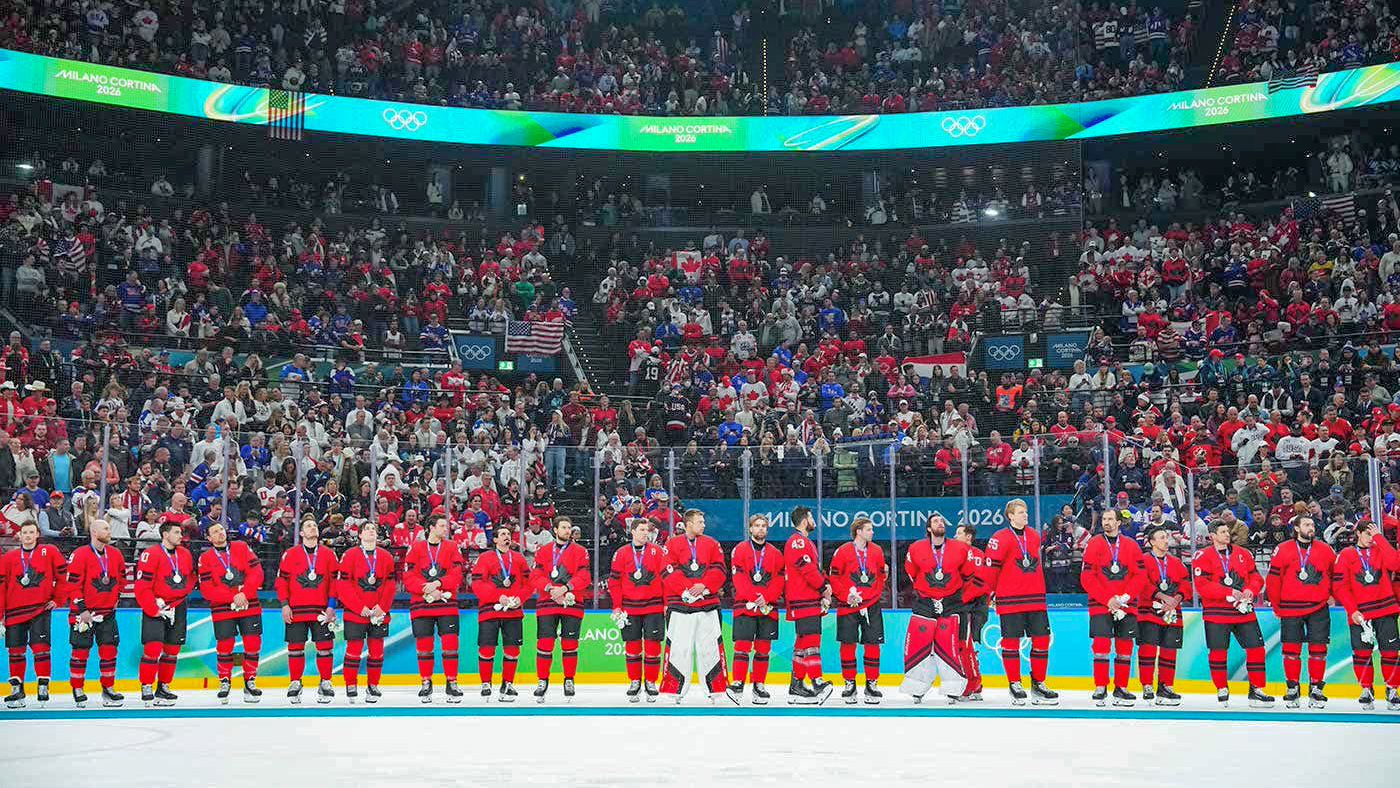
“It was gut-wrenching for sure,” Nicholas Teal said while talking about the feeling of watching Team Canada lose the gold medal game of the Olympic hockey game to the USA.
The 2026 Milano Cortina Olympic men’s hockey games were highly anticipated by many fans around the world, as always. However, this year felt different to many hockey fans as it was the first time since the 2014 games that NHL players were allowed to compete.
The Canadian team featured many new and old NHL faces, including 38-year-old Sidney Crosby and 19-year-old Macklin Celebrini. Of the roster, only Crosby and Drew Doughty had participated in the Olympic Games before, adding a whole new sense of excitement for these games.
Earlier in the tournament, Canada flew through the preliminary rounds with ease. But in the quarter finals, they played a tough match against a team that had earlier beaten them 5-0, Chezcia. The quarter-final game was tied 3-3 at the end of the third and went into a three-on-three overtime, and a goal from the Las Vegas Knights forward Mitch Marner sent Canada to the semi-finals to keep their medal hopes alive. In the game, Crossby also left mid-game with a lower leg injury that would later keep him out of the rest of the tournament.
In the semi-finals, the men struggled against Finland but pulled through with a 3-2 win, earning them a spot in the Gold medal game against their longtime rivals, Team USA.
The matchup between Canada and the United States for the Gold carried more than just Olympic stakes; it reignited one of hockey’s fiercest rivalries. For many Canadians, the matchup wasn’t just about a medal; it was about pride, legacy, and defending the country’s reputation in the sport it holds closest to its identity.
All across the country, the excitement settled in. Bars opened early, liquor sales times were temporarily extended to the start of the game, and West Coast Canadians debated setting 4 a.m. alarms or staying out all night.
In Kamloops, fans lined up outside local sports bars as early as 4:30 a.m., some unable to secure reservations ahead of the highly anticipated puck drop. With the time difference between Italy and Canada, the game began as early as 5 a.m. on the West Coast.
“Oh yeah, I woke up early,” Reed, a TRU student, said.
For many hockey fans, the call to wake up early is no doubt a must-do. Reed said he got up before work to watch the game live. When the puck dropped, it was time for one of the most anticipated sporting events of the year.
The USA was able to score first on the scoreboard when Matt Boldy snuck one in behind Jordan Binnington, Canada’s goaltender of the game, at just six minutes.
The collective stress endured by Canadians was palpable as many watched the team take shot after shot with no return. Connor Hellebuyck, Team USA’s goalie, was a wall; however, Canada restored the nation’s hopes late in the second period when Cale Makar got the puck behind Hellebuyck.
During the third period, neither Canada nor the USA was able to capitalize on their shots, forcing the game into overtime. Two minutes later, it was all over, as Jack Hughes scored the goal that broke Canadian hearts across the country.
“I was disappointed. I wanted Canada to win,” Reed said. Teal agreed, saying the loss felt heavier given the significance of the returning NHL players in the Olympics.
“It is never fun seeing Canada lose, especially after having the NHL players not in the Olympics for so long,” Teal said. “There was a lot of anticipation for Canada to win with that team.”
Despite the loss, students said the excitement surrounding the tournament proved how much Olympic hockey still matters in Canada. The return of NHL players reignited passion across the country, restored the intensity of the Canada–USA rivalry on the world stage and heightened anticipation for the next time the two match up in a hockey event.