
For many international students, Canada signifies adventure, growth and opportunity. Among these opportunities, one factor has convinced several to pursue a future in this country: the possibility of working while studying. This ability is granted to students with study permits, and although not every student is eligible, most are.
To ease the worries of newcomers or those who don’t know where to start, The Omega is simplifying the Government of Canada’s international work information, answering common questions and sharing valuable experiences from full-time international students who are now part-time experts.
Although there are few recent reports on international students working part-time while studying, Statistics Canada and Immigration, Refugees and Citizenship Canada released a 2022 report examining trends in international students’ journeys from students to permanent residents. At that time, the report found that the labour market participation of international students studying at the college or university level increased from seven per cent in 2000 to 57 per cent in 2018. Although it isn’t certain how this specific statistic has changed over time, a recent report explained the changes made regarding international students and temporary workers. In between statistics and numbers, a focus “…on providing job opportunities to those who are already in Canada, including newcomers” was identified.
Determining eligibility
As soon as a full-time international student arrives at a Canadian airport, an immigration officer files a study permit application. The “Conditions” section at the bottom of the document provides students with information about whether they are eligible to work, along with other stipulations. In addition to examining this section, it is also important to check whether the officer permitted both on- and off-campus work, or only one of the two.
Types of work
Before diving into this section, it is relevant to note that students may begin working, either on- or off-campus, only after they have begun their classes.
Working “on-campus” refers to any job within the university community. Examples of these opportunities may include a teaching assistant (TA), a staff member with the university newspaper, or an ambassador representing certain departments, among other positions. The only thing that matters is that the employer has some official affiliation with the school or is otherwise on-campus.
Working “off-campus” allows students to get hired by companies and/or institutions that are not affiliated with their academic institution. One reason to get a job outside the university is that the student can transition from part-time to full-time over the summer.
Working Times
Now that the difference between working on-campus and off-campus has been tackled, let’s move on to how many hours international students may legally work.
When it comes to working off-campus, international students are limited to 24 hours per week, with a few exceptions, like Reading break. This cap is lifted only between semesters and breaks, when students can work full-time (unlimited hours).
In addition to the hours worked off-campus, students can work as many on-campus hours as available, provided they meet the requirements mentioned in the previous section.
In both on-campus and off-campus jobs, it is the student’s responsibility to ensure that all the required legal paperwork is completed so that filing taxes doesn’t become a problem in the future.
How to start
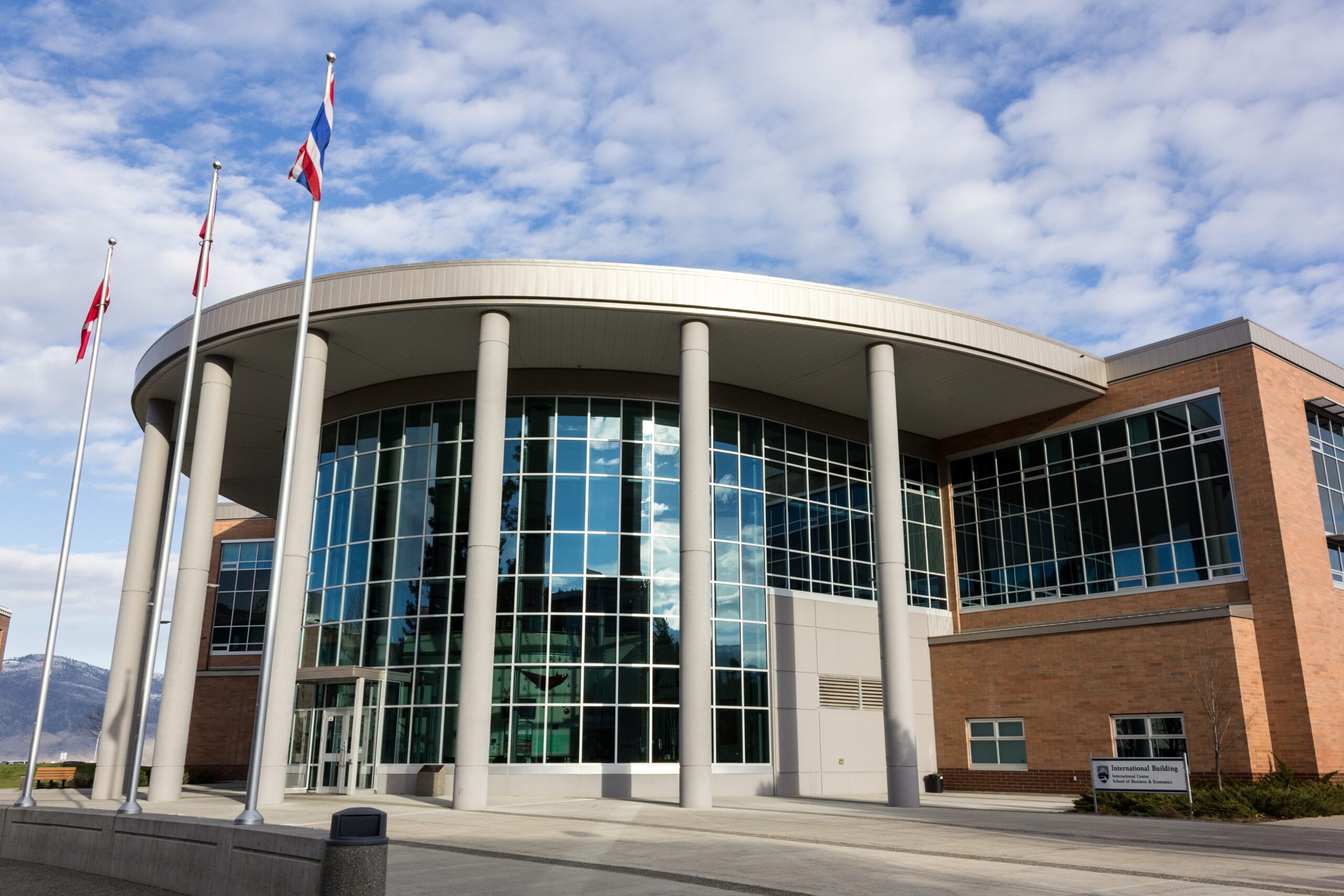
First, students must get assistance to apply for a Social Insurance Number (SIN). With this, the student can work in Canada, receive government benefits and services such as the Medical Services Plan (MSP) and file taxes. With TRU, this application is part of the university’s welcome events. If international students miss this event, they may go to the International Building and seek help from an International Student Advisor.
After that, it is important to get a phone number and start working on resumes (TRU Career Services and the Writing Centre can help with that).
Although preparing a resume may scare some students who lack work experience, it is important to describe the skills they have gained in high school through school projects or presentations. Employers often seek individuals who are enthusiastic, proactive, adaptable and social, even if they lack work experience, as these are skills that may also be gained through life experiences, not simply from work.
Job hunting
When resumes are ready to go, the real game begins. Though nowadays the answer might seem to apply online, there’s more to it than a student might think. A former Forbes contributor wrote an analysis on applying for jobs online or in person and concluded, “…if you’re looking for a job where you’re dealing directly with a customer offering assistance, you should apply in person. If you’re looking for a job where everyone has a computer … it is okay to stick to all online activity.”
Audrey Vo, working on- and off- campus while completing her post-baccalaureate diploma in marketing, shares: “I used to worry about having to hand my resume in person because people in my country usually do that online.” To which she added, “I hesitated a lot, but if I were to give my past self advice, it would be to be more bold. Just come in and ask them, no one is going to judge or anything. If they don’t receive it, then they don’t. That’s all.”
Assuming the student passes the selection process, they may receive a call for an interview. Most of the time, this is when the experience starts to feel real and nervousness sets in. Drashti Odedra is a fourth-year student pursuing a Bachelor of Business Administration (BBA) in Finance who has worked in the restaurant industry for years. When asked what advice they might give job-hunters, they said, “Just be confident. Don’t be scared. Ask as many questions as you need to. Everybody has their first day.”
Life after
Once hired, students may struggle with the learning curves associated with new jobs. Ahnaf Tazwar, a student about to complete his BBA in Supply Chain Management, stated that his confidence improved as he interacted with more customers and began solving workplace problems without help.
But if the student was rejected, it is time to try again and again. Florencia Santamaria, a fourth-year student who has been working in the customer service industry for more than two years while pursuing a major in Chemical Biology, advised: “You might be getting no’s from everyone… but there’s always that one chance you’ll get a yes from [a random] job. It doesn’t matter what kind of job it is. It’s always good to have the experience.”