
Since The Omega relaunched during the Fall semester of 2023, we’ve had the privilege of presenting to readers our Professor Spotlight series. In this series, we interview some of the student body’s favourite professors and sessionals, offering readers a chance to get to know our learned instructors on a deeper, personal level.
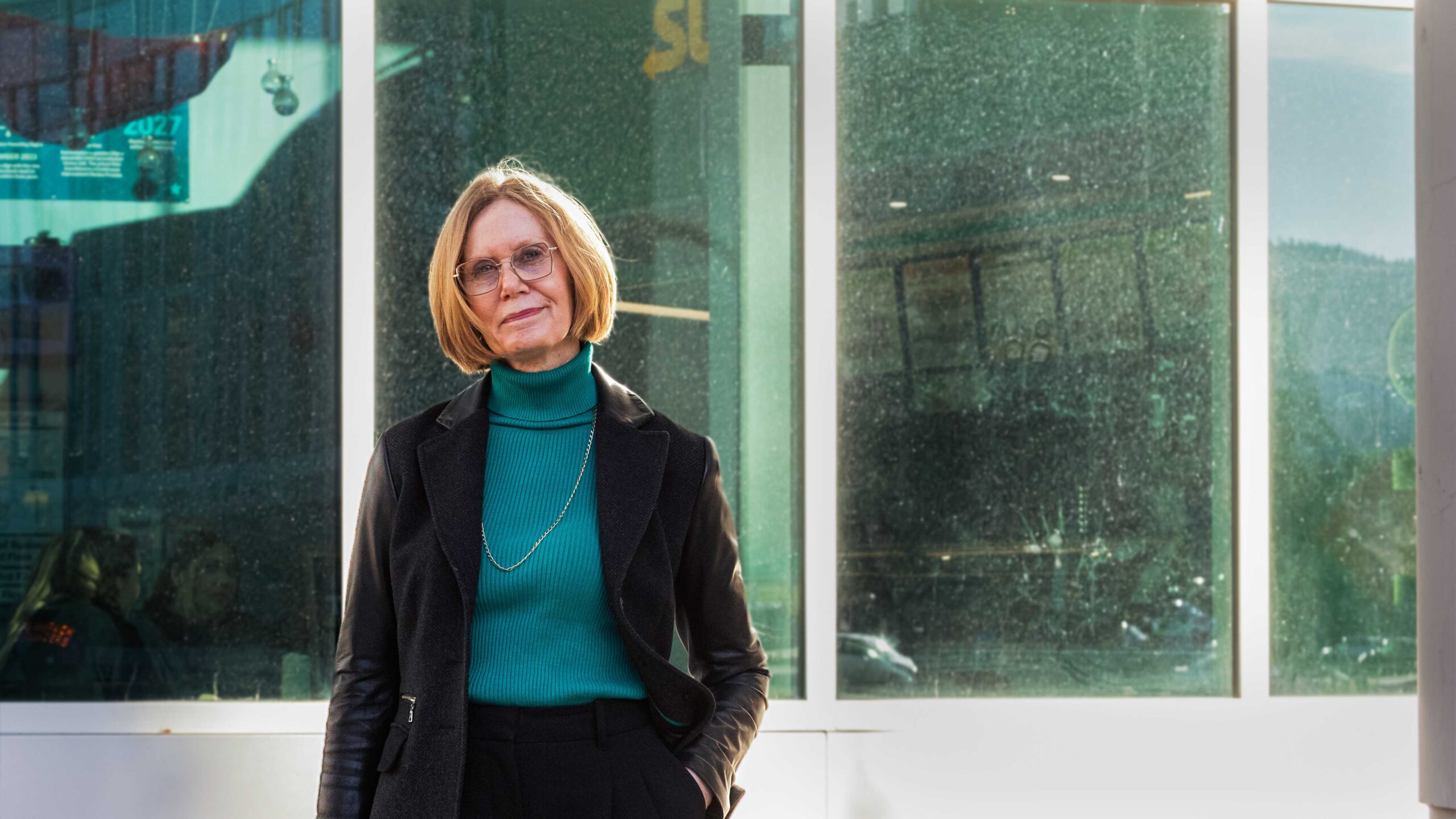
Laura Lamb didn’t set out to be a professor, much less a professor of economics. In a December conversation with The Omega, the chair shared how experiences in psychology and real estate ultimately lead her to economics and teaching.
OS: You took an unorthodox path, starting in psychology and then eventually ending up as a professor of Economics. What inspired that switch?
LL: I really enjoyed my Honours Psychology degree at the University of Winnipeg. When I graduated, I applied for a couple of Master’s [in Psychology] and got accepted, but I just wasn’t certain enough about the career path. I ended up in new home construction, working for a custom builder in sales, marketing, and product development. It was really fun. I learned a lot of different skills.
While I was in the real estate industry, I realized how important the macroeconomy was to new homes. Interest rates affect the real estate market in general, but new home construction is even more sensitive. So, I really started paying attention and trying to understand macroeconomics in terms of inflation and interest rates.
I remember at that time the Bank of Canada was increasing interest rates to deal with inflation, but it was mainly inflation in Eastern Canada, in Ontario. And I’m thinking, “Well, that doesn’t seem fair, because we’re not experiencing that in Manitoba.” So I really [wanted] to understand more.
[During some evening courses] an economics course just fascinated me. It was partly the material and partly the instructor. That professor was just absolutely awesome, and really inspired me.
OS: Was your goal to become an influential teacher, like that instructor was for you?
LL: When I got into the PhD program, it wasn’t specifically to be a professor. I didn’t necessarily think that I wanted to teach. At that time, the federal government was hiring a lot of economists. The cohorts ahead of me were getting jobs with Statistics Canada, the Bank of Canada and Industry Canada. But then, as a PhD student, we had the opportunity to teach. Once I started, [I realized] I love teaching right away. But it wasn’t really till I had the experience.
OS: You hold a lot of roles on campus – you’re a chairperson, researcher, and professor. What challenges do you face in these roles, and what have you learned along the way?
LL: As chair, I’m fortunate [to have] a very functional department, so in a lot of ways it’s relatively easy. Of course, you don’t expect everybody to agree all the time. But something I’ve learned throughout life is just to be calm and cool. Try not to let things rattle you when you’re leading people. Give everyone an opportunity to contribute. Because I think a lot of times, people just want to be heard. At the end of the day, you follow democratic processes, and people are typically okay with that.
OS: How about as an instructor?
LL: The big thing we’re dealing with now is AI. The initial reaction was, “How is this going to affect academic integrity?” But after learning more and seeing what a powerful tool it is, it’s [becoming more] about teaching students to use it responsibly. I’d say in everything I’ve taught the last few years, I’m now incorporating AI.
OS: What has the student response been to those projects, where you’re using AI in the classroom?
LL: It’s been very positive. It’s informing students and showing them that it’s not necessarily a substitute for your own work, but [you can] use it to be more efficient and more productive. [AI is] great for brainstorming, but you have to require that a student go and verify any information that they find.
OS: Since we discussed challenges, what do you find most fulfilling about your roles?
LL: The most rewarding aspect of my job is student success. I like to supervise student research– I’ve always got at least three to five students I’m supervising, typically from the [Master’s] programs. You’re working one-on-one with a student, taking them through the research process, providing feedback, and teaching them at the same time. It’s extremely rewarding when you see how far students come.
OS: Your research is interdisciplinary, blending economics with psychology, sociology, and geography. How do you balance that quantitative analysis with the qualitative human side?
LL: You can never tell the story just with numbers. The history, the story, the context [all] matter. So that’s important to try to capture to the degree you can.
OS: Any advice for students who are considering graduate studies?
LL: Especially at the undergraduate level, seek out research opportunities. The skills you’ll learn through research, I believe, are very transferable. Out in the real world, [it’s an asset] if you’re able to pick up a research paper, to evaluate it, and to see how [it] may affect a decision and discussion that you’re having in your workplace. Whether it’s about HR, finance, or public policy. I think the best decisions are evidence-based.
OS: How do you like to spend your time off campus?
LL: I love the outdoors. We’re going to the Tofino area [over the break], and I can just hardly wait to go walk in a rainforest, to breathe the air and take in the sights…[and] to hear the ocean.
OS: What are you most looking forward to in 2026?
LL: This is my last term as chair, so I’m looking forward to finishing off some initiatives, and then at the end of my term in June, I look forward to focusing on my research.