
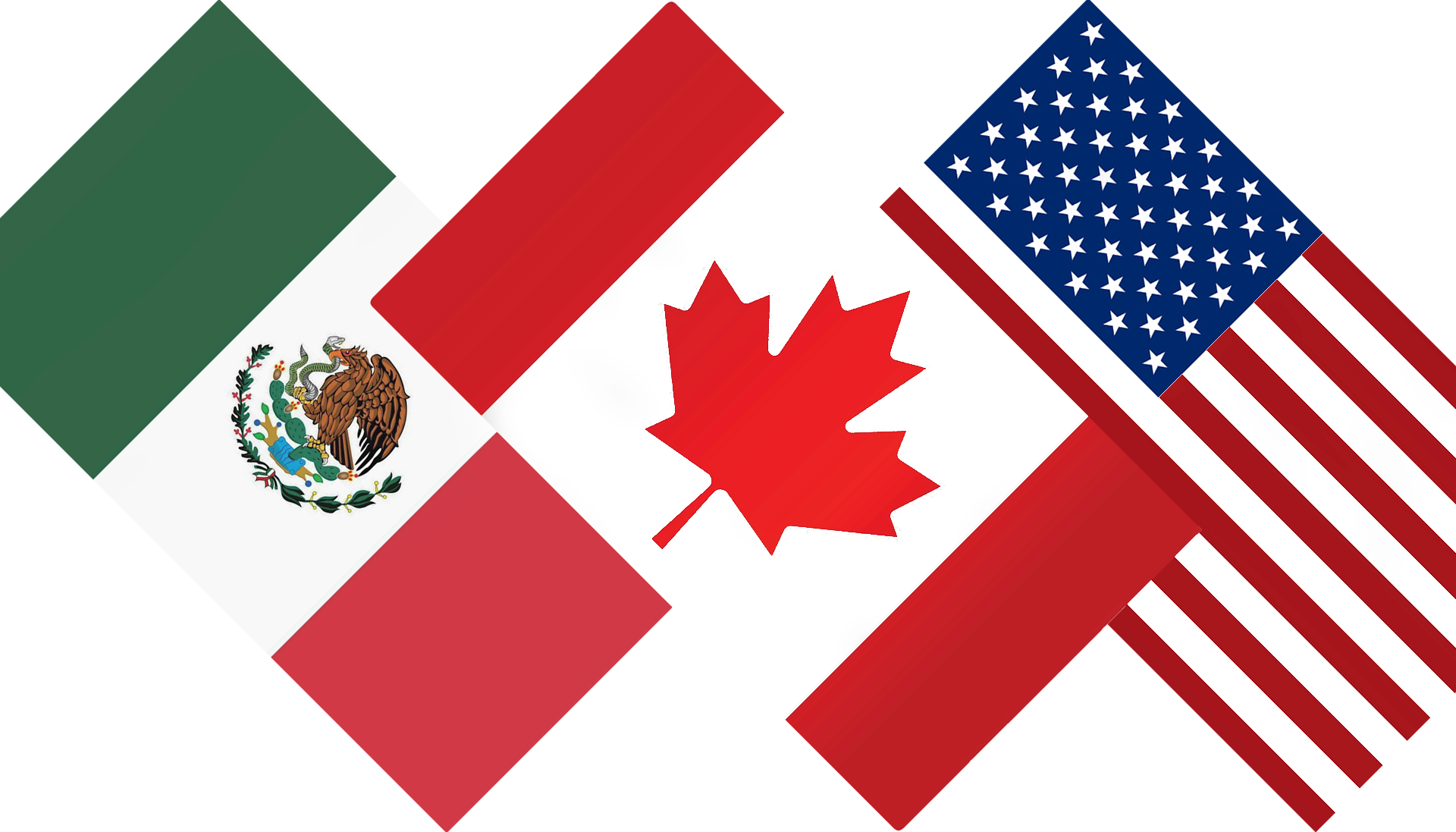
Surrounded by the mechanized interior of a Ford Motor plant in Michigan this past Tuesday, United States President Donald Trump referred to the Canada-United States-Mexico Agreement (CUSMA) as “irrelevant.”
“No real advantage to us,” he said of the North American trade agreement. “Canada would love it. Canada wants it—they need it. We don’t need their products.”
Just three days after Trump’s statement on Jan. 16, Prime Minister Mark Carney made a major announcement: he had brokered a preliminary trade agreement with China. The deal was going to, as Carney put it, “remove trade barriers and reduce tariffs.”
Since the start of Trump’s second term, the United States has taken a somewhat adversarial stance toward Canada, particularly in areas of trade. Within the past year, Trump has hit the country with sweeping tariffs, shut down trade talks and repeatedly expressed his interest in annexing Canada (which he referred to as a “51st state”).
CUSMA, which was put in place by Trump during his first term, is due for reassessment in July. The agreement allows for improved integration of the three North American economies, enabling each nation to benefit from cheaper and more reliable trade.
Just like with Canada and Mexico, CUSMA has resulted in significant improvements in trade, investment and job creation in the United States. Combined, the three nations account for nearly one-third of the global GDP, and the trade agreement supports 9.5 million jobs across the continent.
The United States president’s recent comments, though, have cast doubt on whether the agreement will be renewed later this year or left to expire. TRU business and economics professor, Paul Clark, believes that Trump’s claims about CUSMA’s irrelevance to the States are a misrepresentation.
“I think it’s a negotiation tactic,” Clark said. “To diminish the importance of the agreement.”
According to Clark, Trump’s statements do not necessarily spell doom for the trade agreement. He believes that CUSMA will eventually be renewed, but perhaps after putting Canada through some difficult negotiations.
Clark’s main worry, he explains, is the unpredictability. Trump’s actions over the past year have created uncertainty around the Canadian market, which may very likely drive businesses away.
“Unpredictability contributes to instability, and that instability leads to less economic activity,” Clark said. “That, I think, is the real issue at play here.”
The ramifications of this instability can have significant impacts on Canadian employment and job security, among other things. Businesses seeking to avoid risk will refrain from expanding in Canada for the time being and may adopt more conservative hiring practices. That is, if they even choose to stay. Regardless of CUSMA’s status, this is already a possibility to contend with.
Clark is also concerned about the United States’ apparent interest in Canada’s supply-management system, the regulatory oversight controlling production quotas in the dairy industry. These oversights protect local farmers from overproduction losses. The CUSMA negotiations could require Canada to let go of its supply-management system, a situation Clark describes as “detrimental” to Canadian dairy farmers.
It goes without saying that Canada’s dependency on trade with the United States has put the country in a tight corner.
But Canada hasn’t exclusively focused on trade with their neighbours down south, Clark said. They have entered into solid trade agreements and engaged in trade with other countries in Asia and Europe. Yet issues like transportation, culture and language barriers have often reared their head.
Soon after Carney ascended to the role of prime minister in March 2024, he made clear that the issue of Canadian independence would be prioritized.
“It’s my solemn promise that when Donald Trump threatens us again, we will fight back,” he said. “We will fight back with everything we have to get the best deal for Canada. We will build an independent future for our country, stronger than ever.”
Carney’s recent trip to China has seemingly been the latest effort to fulfill this promise. Resetting trade relations with China (especially after Canada followed suit on the US’ trade war with the Asian nation, imposing 100 per cent tariffs on Chinese electric vehicles) is a significant step towards independence.
“I think Mark Carney is doing a really good job,” Clark said. “I think Canada is in a good position just by virtue of the fact that we have a good prime minister who is respected internationally and has experience in these kinds of difficult environments.”
Despite Carney’s efforts, things won’t be smooth sailing moving forward. The Canadian dependency on the States stems from several factors, including similarities in language and culture, as well as the obvious physical proximity and logistical feasibility. It also exists because of the US’s massive rate of consumption, especially relative to other nations worldwide.
Clark also warns about leaving the third nation in CUSMA, Mexico, out of the equation, as they are also a major player.
“Trump likes to negotiate one-on-one, but we have to remember that it’s a three-way agreement,” Clark said. “If Canada and Mexico influence the United States, it’s much more effective than just Canada or just Mexico. I think that trilateralism is really important to remember, in terms of negotiations.”
Only time will tell what the volatile Canada-US relationship will develop into, but Canada’s recent actions prove that it is uninterested in remaining on Trump’s roller-coaster.